Disclaimer: The products mentioned in this article are strictly for laboratory and research purposes only. They are not intended for human consumption, diagnostic, or therapeutic use.
The Critical Role of Quality in Research
In the meticulous environment of a research laboratory, the validity of an experiment is entirely dependent on the quality of the materials used. When studying complex biological pathways, introducing unknown variables can compromise months of work. This is why understanding peptide purity and HPLC (High-Performance Liquid Chromatography) verification is fundamental for any researcher utilizing synthetic peptides.
What Does Peptide Purity Actually Mean?
Peptide purity refers to the percentage of the target peptide sequence present in a sample compared to the presence of impurities. These impurities are typically the result of the synthesis process itself. During solid-phase peptide synthesis (SPPS), amino acids are added one by one to a growing chain. Occasionally, an amino acid may fail to attach, or an unintended side reaction may occur, resulting in truncated sequences or deletion sequences.
For example, if a researcher purchases Melanotan 2 with a stated purity of 99%, it means that 99% of the sample by weight is the exact intended peptide sequence, while the remaining 1% consists of synthesis byproducts.
Why Impurities Compromise Scientific Data
Using peptides with low purity levels can have disastrous effects on experimental outcomes. Impurities can act as antagonists, competitive inhibitors, or even trigger entirely unrelated biological responses. In cell culture studies, unexpected cytotoxicity is often traced back to impurities rather than the target peptide itself.
When researching highly sensitive compounds like GHK-Cu or MOTS-c, even minor variations in the sample can alter receptor binding affinity, leading to skewed data and irreproducible results.
The Gold Standard: HPLC and Mass Spectrometry
To ensure the integrity of research peptides, reputable suppliers utilize rigorous analytical techniques. The two most critical methods are High-Performance Liquid Chromatography (HPLC) and Mass Spectrometry (MS).
High-Performance Liquid Chromatography (HPLC)
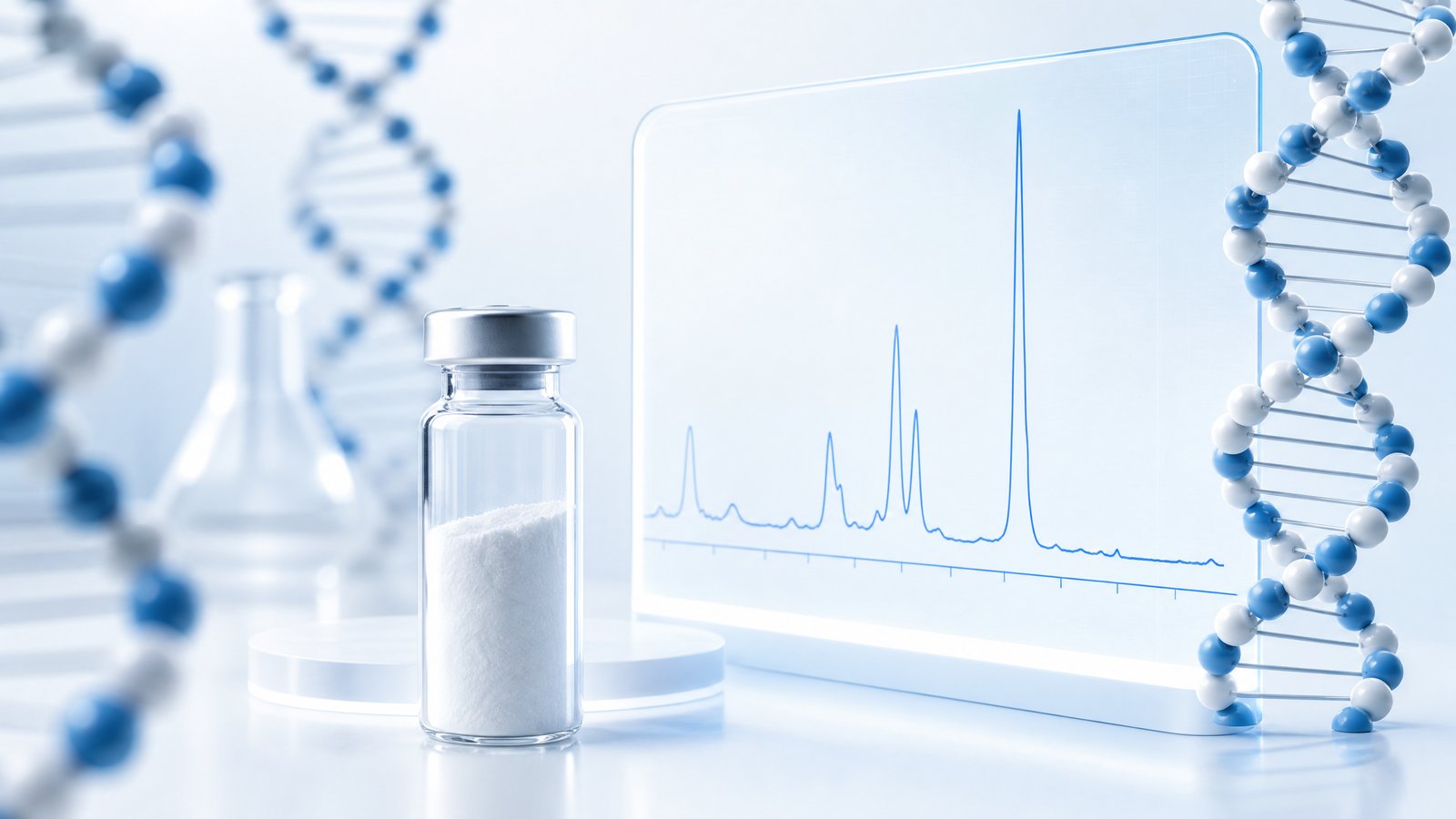
HPLC is used to separate, identify, and quantify each component in a mixture. The peptide sample is dissolved in a solvent and forced through a column packed with solid adsorbent material at high pressure. Because the target peptide and its impurities interact differently with the adsorbent material, they exit the column at different times. The resulting chromatogram provides a clear visual representation of the sample’s purity.
Mass Spectrometry (MS)
While HPLC determines the purity percentage, Mass Spectrometry is used to confirm the identity of the peptide. MS measures the mass-to-charge ratio of ions, verifying that the molecular weight of the primary compound in the sample matches the theoretical molecular weight of the target peptide.
Choosing a Reliable Supplier
Researchers must demand transparency from their suppliers. A reliable vendor will always provide Certificates of Analysis (COA) that include both HPLC chromatograms and MS spectra for their batches. At Life Peptides, we prioritize the integrity of your research. Whether you are ordering Cognitive & Nootropic Peptides or metabolic compounds, all items in our catalog undergo stringent third-party testing to guarantee maximum purity.
Conclusion
In scientific research, precision is non-negotiable. Understanding and verifying peptide purity through HPLC and MS is not merely a best practice; it is a fundamental requirement for producing valid, reproducible data. By ensuring the quality of your research materials, you safeguard the integrity of your scientific discoveries.